
MY INVESTMENT - KNOXVILLE, TN
A 4-BED FAMILY HOME IN KNOXVILLE, TN - BOUGHT IN 2018, STILL HELD TODAY.
This is one of my own personal investments. I'm sharing the full numbers, the good years and the slow ones, because I think transparency is more useful than a highlight reel.
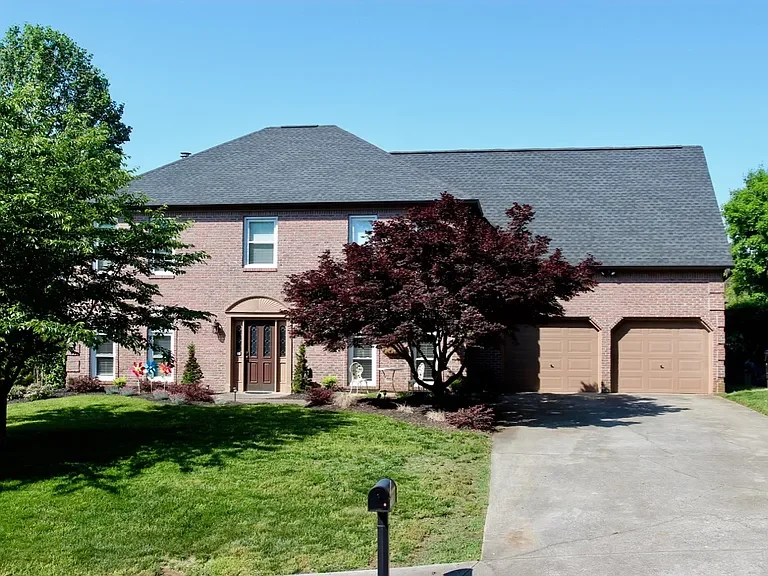
In late 2018, I acquired a ~3,100 sq. ft., 4-bedroom, 3-bathroom single-family home in Knoxville, TN (zip 37922). It took a few months to find the right tenant, who moved in early 2019 at $2,100/month. Today the rent is ~$2,850/month.
Latest read: 20% annualized return since purchase, using the same conservative playbook I use with my clients. When I made this investment in 2018, my model projected an 11% IRR over a 20-year hold. Eight years in, the property is running well ahead of that plan.
HOW TO READ THIS
When I make a personal investment decision, I build a 20-year model. Partly because that's the horizon I actually hold for, and partly to remind myself that every one of these decisions is a long-term one. I did the same when I bought this house in 2018.
This post compares what actually happened with what that 2018 model predicted. The model projected an 11% IRR over the full 20 years. It's now been eight years, so the fair comparison is the actual return so far against what the same model expected at this point in the hold, which was about 13%. (Why a 20-year plan at 11% reads 13% at year eight is a topic for another post. The short version: the 20-year number is the more conservative one.)
The actual read at year eight: 20%.
So you'll see three numbers in this post. 11% is the 20-year plan. 13% is the plan at this point in the hold. 20% is what actually happened. The post is mostly about the gap between the last two.
INITIAL INVESTMENT
| Item | Amount |
|---|---|
| Purchase price | $307,000 |
| Mortgage | $230,000 |
| Down payment | $77,000 |
| Closing and financing costs2 | $12,097 |
| Rental prep | $1,473 |
| Total initial investment | $90,570 |
WHY KNOXVILLE? THREE REASONS.
Educated, stable tenants. The area benefits from a well-educated population, driven by the University of Tennessee and Oak Ridge National Laboratory, as well as strong public schools. This attracts community-oriented tenants who maintain properties well and tend to stay longer.
A conservative, low-volatility market. Knoxville's real estate market barely flinched during the 2008/09 subprime crisis. Rent yields consistently exceed 6% and property taxes sit below 0.5%, a rare combination that makes long-term passive income reliable.
Local expertise I've built over time. This is my second investment property in Knox County. That familiarity with the local market, and the network of trusted service providers I've built here, is part of what makes the numbers work.
I chose this market because it was boring. The point was never to catch a boom; it was to earn a solid return with limited downside.
(1) THE RENTAL INCOME STORY
Cash flow was negative in the first two years. That's normal: a few months of vacancy in 2018, then a partial year of rent in 2019 against a full year of carrying costs. It turned positive in 2020, dipped negative again in 2021 during a tenant turnover that came with a heavy maintenance bill, and has been positive every year since. A second turnover in 2024 reset rent to market, and 2025 was the first full year at the new rate, roughly tripling annual cash flow.
That's the honest shape of a rental: lumpy in the early years, then steadily improving as rent grows and the mortgage balance shrinks.
Total rent cash flow (2018-2026): $22,500
Accumulated principal paid down (2018-2026): $35,200
Total rental value created: $57,700 (6.2% annualized on the initial investment)
My general policy is to prioritize stability for good tenants over squeezing every dollar of rent. The two turnovers that did happen allowed rent to adjust to market:
Rent: $2,100/month (2019) → ~$2,850/month (2026)
Annual rent increase: ~4.5%
(2) WHAT THE PROPERTY IS WORTH TODAY
I modeled 3.5% annual appreciation when I bought this. The market delivered closer to 8%, driven by the post-COVID surge of 2019-2022. Since then, growth has settled back to a normal pace: 3% in 2024, 1% in 2025, and about 2% in 2026.
Purchase price (2018): $307,000
Estimated value (September 2026): ~$566,700³
Average annual appreciation: ~7.7%
PUTTING THIS TOGETHER: LATEST READ, 20% ANNUALIZED OVER 8 YEARS
Combining rental income, principal payments, and appreciation, this investment has created ~$317,000 of value on an initial $90,570, a 20% annualized return from September 2018 to the end of 2026.
| Component | Value created | Annualized |
|---|---|---|
| Rental cash flow | $22,500 | 2.7% |
| Principal payments | $35,200 | 4.1% |
| Appreciation | $259,700 | 17.8% |
| Total | $317,400 | 20.0% |
And remember: this property hasn't been sold. The clock is still running.
WHAT IF THE MARKET HAD BEEN JUST… NORMAL?
The 20% is real, but I don't want you to walk away thinking it depends on a once-in-a-generation surge. Here's what the same property looks like using the projections I actually made in 2018. Note that I was conservative on every line, not just appreciation: I modeled $1,900/month starting rent and got $2,100.
| 2018 model | Actual | |
|---|---|---|
| Starting rent | $1,900/mo | $2,100/mo |
| Rent growth | 2.8%/yr | ~4.5%/yr |
| Appreciation | 3.5%/yr | ~7.7%/yr |
| House value, 2026 | ~$419,000 | ~$566,700 |
| Rental cash flow | $11,000 | $22,500 |
| Principal payments | $35,200 | $35,200 |
| Appreciation | $112,100 | $259,700 |
| Total value created (on $90,570 invested) | $158,300 | $317,400 |
| Annualized return, 2018-2026 | 13.0% | 20.0% |
A 13% return in a completely normal market. That's the conservative playbook, and that's the case I build every investment around. The rest is upside.
As a reminder, the 13% here is the 2018 plan read at year eight; the full 20-year plan was 11%.
On luck
Other investors sometimes tell me I got lucky with this one. Fair, but let's be precise about which part. I estimated this house at 11% over 20 years. Any competent, conservative plan in a stable market should get you there; that's not luck, that's doing the work. The plan said 13% at this point. That's still not luck. The gap from 13% to 20% is the lucky part, and I'll take it. But I made the decision on the 11%, I'd have been satisfied with the 13%, and I'd make the same decision again tomorrow without counting on the 20%.
WHY I DON’T SELL
The ~6% annual return from rent and principal payments arrives largely sheltered from income tax, because depreciation on the building offsets most of the taxable rental income, and I have roughly 20 more years of depreciation to use. In my case, roughly $9,000 a year of depreciation (a $311K cost basis, 80% of it depreciable over 27.5 years) offsets most of the ~$15,000 in cash flow plus ~$5,000 in principal payments. Your situation will differ, so check with your own CPA. Selling would trigger tax on the gain and recapture of that depreciation. Holding lets the appreciation compound untaxed and the cash flow keep coming.
In a market chosen for stability, the best exit is often no exit.
THE FULL PICTURE, YEAR BY YEAR
Every year, including the ones that were flat or negative. No editing.
| Year | Cash flow | Cash flow before principal | Estimated value3 | Mortgage balance (EOY) | Net equity | Notes |
|---|---|---|---|---|---|---|
| 2018 | ($3,347) | ($2,754) | $307,000 | $229,407 | $77,593 | Purchased Sept; vacant while finding tenant |
| 2019 | ($2,813) | $844 | $351,400 | $225,750 | $125,650 | Tenant moved in March; high management fees |
| 2020 | $3,893 | $7,723 | $382,900 | $221,920 | $160,980 | |
| 2021 | ($3,630) | $380 | $469,000 | $217,909 | $251,091 | Tenant turnover; major maintenance |
| 2022 | $4,575 | $8,775 | $507,800 | $213,709 | $294,091 | |
| 2023 | $1,152 | $5,550 | $534,200 | $209,310 | $324,890 | Maintenance |
| 2024 | $2,013 | $6,620 | $550,000 | $204,704 | $345,296 | Second tenant turnover; rent reset to market |
| 2025 | $10,674 | $15,499 | $556,100 | $199,880 | $356,220 | First full year at new rent |
| 20261 | $9,992 | $15,044 | $566,7003 | $194,827 | $371,873 | LLC conversion; Jan-Sep actuals, Oct-Dec projected |
¹ 2026 figures are a year-end estimate: January-September actuals plus a projection for October-December for cash flow and mortgage balance.
² I bought the house in cash and did a cash-out refinance for $230,000 in April 2019. For simplicity, the numbers treat the mortgage as starting at purchase; the refinancing cost is included in closing costs.
³ Estimated values are Zillow Zestimates as of September 2026: year-end values for 2019-2025, and the current estimate for 2026. Zillow revises its historical estimates over time, so these figures may differ from what Zillow shows in the future.
THIS IS A PLAYBOOK I USE WITH EVERY CLIENT.
Conservative market selection. Long-term hold. Trusted local network. Full transparency on the numbers - including the slow years.
If you want to understand what this could look like for your situation, let’s talk.
See the North Las Vegas case study - a different market, a different story